
Why This Question Comes Up So Often
As homes and condos become more modern, homeowners increasingly face the same decision: motorized shades or manual shades? At first glance, the difference may seem simple – one is automated, the other is not. But in practice, the choice affects daily comfort, long-term usability, and even property value.
For condos with large windows, floor-to-ceiling glass, or hard-to-reach areas, this decision becomes even more important. Understanding how both options perform in real life helps avoid regret later.
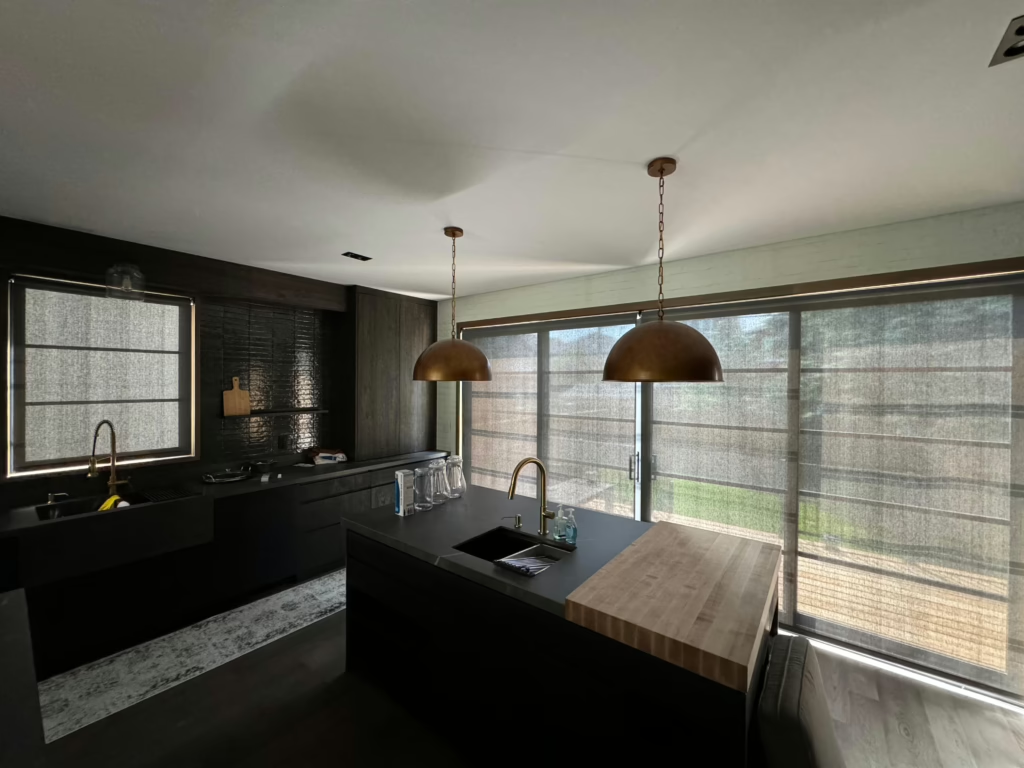
What Are Manual Shades?
Manual shades are operated by hand using a chain, cord, or spring mechanism. They are widely available and come in many styles, including roller shades, cellular shades, zebra shades, and blackout shades.
Why Manual Shades Are Still Popular
- Lower upfront cost
- Simple operation
- Wide range of fabrics and styles
- No electrical or battery requirements
For smaller windows or secondary rooms, manual shades can be a practical and cost-effective solution.
What Are Motorized Shades?
Motorized shades use an electric motor controlled by a remote, wall switch, smartphone app, or smart home system. They can be battery-powered, hardwired, or integrated into a broader automation setup.
How Motorized Shades Are Typically Used
- Daily open/close schedules
- Controlling multiple shades at once
- Managing tall or wide windows
- Integrating with smart home routines
Motorization transforms window treatments from static features into active systems.
Convenience: The Biggest Day-to-Day Difference
This is where the contrast between motorized and manual shades becomes most noticeable.
Manual Shades in Daily Use
Manual shades work well – until:
- Windows are tall or wide
- There are many shades in one space
- Access is blocked by furniture
- Shades are adjusted frequently
Over time, repetitive manual operation can become inconvenient.
Motorized Shades in Daily Use
Motorized systems allow:
- One-touch control
- Scheduled operation
- Consistent positioning
- Effortless adjustments
For many homeowners, this convenience alone justifies the upgrade.
Cost Comparison: Upfront vs Long-Term Value
Cost is often the deciding factor, but it’s important to look beyond the initial price.
Manual Shades: Lower Entry Cost
Manual systems generally cost less upfront. They can be ideal when:
- Budget is limited
- Window sizes are standard
- Automation is not a priority
However, wear on chains and mechanisms can increase maintenance over time.
Motorized Shades: Higher Initial Investment
Motorized shades cost more initially, but they often:
- Last longer due to reduced physical wear
- Add perceived value to the home
- Improve daily usability
For primary living spaces, many homeowners view motorization as a long-term upgrade rather than a luxury.
Safety and Clean Design
Safety and aesthetics matter – especially in condos.
Cordless Advantage
Motorized shades are inherently cordless, which:
- Improves safety
- Creates a cleaner look
- Aligns with modern interior design
Manual shades can be cordless as well, but options may be more limited.
Performance for Large and Floor-to-Ceiling Windows
Large windows change the equation entirely.
Manual Limitations
- Heavy shades can be difficult to operate
- Inconsistent alignment across multiple windows
- Increased strain on hardware
Motorized Strengths
- Smooth, even movement
- Precise positioning
- Synchronized control for multiple panels
For floor-to-ceiling windows, motorization often becomes the most practical solution rather than an upgrade.
Smart Home Integration
Motorized shades fit naturally into modern smart homes.
Common Integrations
- Voice control
- Scheduled lighting routines
- Temperature and glare management
- Integration with lighting and climate systems
While not essential, automation enhances both comfort and efficiency.
Energy Efficiency and Light Control
Consistent shade positioning plays a role in energy management.
Motorized shades can:
- Close automatically during peak sunlight
- Open to maximize natural warmth
- Reduce cooling and heating strain
Manual shades rely entirely on user consistency, which is harder to maintain.
Reliability and Maintenance
A common concern is whether motorized systems are reliable long-term.
What to Expect
- Modern motors are quiet and durable
- Battery systems can last years between changes
- Professional installation minimizes issues
Manual shades are mechanically simpler, but that doesn’t always mean fewer problems – chains and clutches wear over time.
Which Option Is Better for Condos?
In condos, the choice often depends on:
- Window size and height
- Daily usage patterns
- Design goals
- Long-term plans
Many condo owners choose a hybrid approach:
- Motorized shades for main living areas
- Manual shades for secondary rooms
This balances budget with functionality.
FAQs: Motorized Shades vs Manual Shades
Are motorized shades really worth it?
For large windows, frequent use, or smart homes – yes.
Do motorized shades require wiring?
Not always. Many systems are battery-powered.
Are manual shades more reliable?
They’re simpler, but not necessarily more durable long-term.
Can motorized shades be added later?
In some cases, yes – but planning ahead is easier.
Do motorized shades increase home value?
They often increase perceived value and modern appeal.
Are motorized shades noisy?
Modern systems are designed to operate quietly.
Final Thoughts
Choosing between motorized shades and manual shades isn’t about technology – it’s about how you live in your space. Manual shades remain practical and affordable, but motorized shades offer a level of comfort, consistency, and modern functionality that’s hard to ignore.
For condos and modern homes with large windows, automation often moves from “nice to have” to “makes sense.” The key is choosing the right solution for how the space is actually used condo layouts and regulations helps ensure a smooth process and a result that truly fits your space.
Ready to explore window treatments for your condo? Get in touch today to book a consultation and start planning the right solution for your space.